Providing you with a one-stop solution for tractors





How to Choose a Tractor for Small Plots / Large Plots? Everything You Need to Know in One Article
Release time:
2026-03-16
When it comes to choosing a tractor, the size of your farmland is one of the most critical factors that directly determines which type of tractor is suitable for you. Many farmers make the mistake of choosing a tractor based solely on brand or price, ignoring the matching degree between the tractor and the plot size. As a result, they end up with a tractor that is either "overkill" for small plots, wasting fuel and increasing costs, or "underpowered" for large plots, failing to meet the operation needs and affecting work efficiency. Today, we will focus on the differences between small plots and large plots, and detail how to choose a tractor that fits your farmland, helping you avoid detours and make the most cost-effective choice.

First, let’s clarify the definition of small plots and large plots in agricultural production. Generally speaking, small plots refer to farmland with an area of less than 50 mu, which are mostly distributed in hilly areas, mountainous areas, or suburban areas. The characteristics of such plots are narrow roads, irregular shapes, many obstacles (such as trees, stone walls, and ditches), and the main operations are shallow plowing, sowing, weeding, and small-scale harvesting. Large plots, on the other hand, refer to farmland with an area of more than 100 mu, mostly distributed in plain areas with flat terrain, wide roads, and regular shapes. The main operations include deep plowing, harrowing, large-scale sowing, harvesting, and traction of heavy agricultural machinery. The different characteristics of the two types of plots determine the huge differences in the performance requirements of tractors.
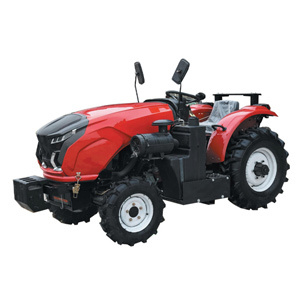
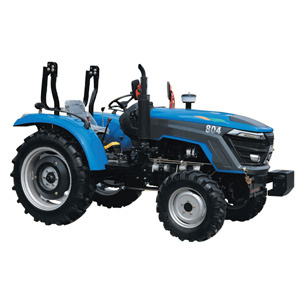
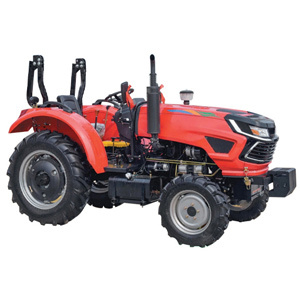
For small plots, the core demand for tractors is flexibility, compactness, and energy saving. Since the roads in small plots are narrow and there are many obstacles, a large and heavy tractor will be difficult to maneuver, and even damage the crops or get stuck. Therefore, when choosing a tractor for small plots, the first thing to consider is the size and weight of the tractor. It is recommended to choose a small and medium-sized tractor with a length of less than 3.5 meters, a width of less than 1.8 meters, and a weight of 1.5-2.5 tons. Such tractors are flexible and can easily pass through narrow roads and irregular plots. In terms of power, there is no need to pursue high horsepower. A tractor with 20-50 horsepower is completely sufficient. Too high horsepower will not only increase the purchase cost but also lead to higher fuel consumption, which is not cost-effective for small-scale operations. In addition, the steering system is also very important. A tractor with hydraulic power steering is more labor-saving and flexible, which is suitable for frequent turning operations in small plots. For orchard or greenhouse small plots, it is also recommended to choose a tractor with adjustable track width, which can adapt to the row spacing of fruit trees or vegetables and avoid damaging the crops.
In addition to flexibility and compactness, small plot tractors also need to focus on multi-functionality. Since small-scale farmers usually have limited investment, a tractor that can complete multiple operations (such as plowing, sowing, weeding, and spraying) can save the cost of purchasing additional agricultural machinery. Therefore, when choosing, you can pay attention to the matching degree of the tractor with various auxiliary tools. It is best to choose a model that can be quickly connected with plows, seeders, sprayers, and other tools, which can improve the utilization rate of the tractor. At the same time, the reliability of the tractor is also crucial. Small-scale farmers usually have limited maintenance experience and funds, so a tractor with low failure rate and easy maintenance can reduce the trouble of later use. It is recommended to choose a model with a mature engine and transmission system, and the parts are easy to purchase, so that when a failure occurs, it can be repaired in a timely manner without affecting the farming progress.
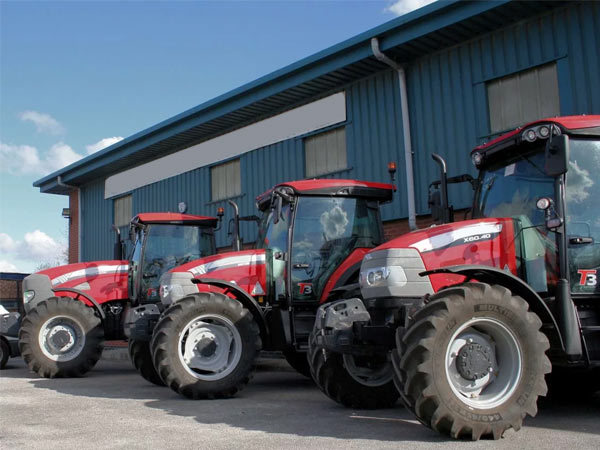
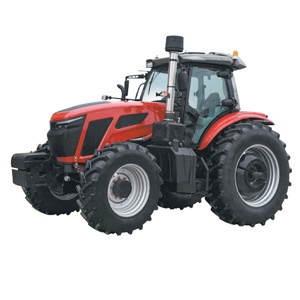
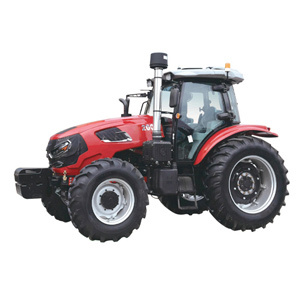
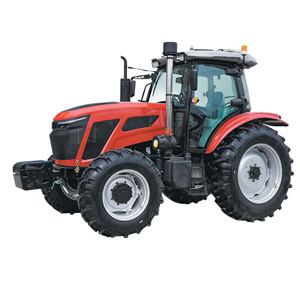
For large plots, the core demand for tractors is power, efficiency, and durability. Large plots have a large area and heavy operation tasks, requiring tractors to have strong power and traction to drive heavy agricultural machinery and complete large-scale operations efficiently. Therefore, when choosing a tractor for large plots, power is the primary consideration. It is recommended to choose a large-sized tractor with 60-150 horsepower. The higher horsepower can ensure that the tractor can maintain stable operation when carrying out heavy-load operations such as deep plowing and harrowing, and improve the operation efficiency. In terms of transmission system, power shift transmission or continuously variable transmission (CVT) is more recommended. Such transmission systems can realize stepless speed change, reduce the labor intensity of operators, and adapt to different operation speeds, which is suitable for long-time continuous operation in large plots.
In addition to power and transmission system, the chassis and traction performance of large plot tractors are also very important. The chassis of large plot tractors needs to have strong bearing capacity to withstand the weight of heavy agricultural machinery and the impact of uneven ground. It is recommended to choose a reinforced chassis with thickened beams and high-strength tires, which can improve the stability and durability of the tractor. The traction performance is directly related to the efficiency of pulling agricultural machinery. A tractor with strong traction can reduce the slipping phenomenon during operation and ensure the smooth progress of the operation. Some high-end large plot tractors are also equipped with a four-wheel drive system, which can further improve the traction performance and passability, and adapt to complex working conditions such as rainy days and muddy fields. In addition, fuel consumption is also a key factor to consider for large plot tractors. Since large plots require long-time continuous operation, a tractor with low fuel consumption can save a lot of operating costs in the long run. It is recommended to choose a model with an energy-saving engine and optimized power system.
Whether it is for small plots or large plots, there are some common principles to follow when choosing a tractor. First, match the tractor with your actual operation needs. Do not blindly pursue high horsepower or large size, but choose according to the plot size, operation type, and investment budget. Second, pay attention to the brand and after-sales service. A good brand usually has more reliable product quality and a perfect after-sales service system, which can solve the maintenance problems in a timely manner when the tractor fails. Third, conduct on-site test drive and inspection. Only through actual operation can we know whether the tractor's performance, operation feel, and flexibility meet their own needs. Finally, consider the cost performance. The most expensive tractor is not necessarily the best, and the cheapest one may not be suitable. Choose a model with reasonable price, excellent performance, and suitable for your own needs.
In conclusion, choosing a tractor for small plots and large plots is not a difficult thing as long as you grasp the core needs. For small plots, focus on flexibility, compactness, multi-functionality, and energy saving; for large plots, focus on power, efficiency, durability, and traction performance. At the same time, follow the common principles of tractor selection, and you can choose a cost-effective tractor that fits your farmland. I hope this article can help every farmer and agricultural operator choose the right tractor, improve farming efficiency, and achieve better harvests.
RELATED BLOG
CONTACT US
Add : Hanjia Village, Xianggongzhuang Street, Zhangqiu District, Jinan City, Shandong Province


POPULAR PRODUCTS
CONSULTAR
Copyright :Shandong Free Pilot Machinery Co.,Ltd. Powerby :CEGLOBAL | SEO | Privacy agreement