Providing you with a one-stop solution for tractors

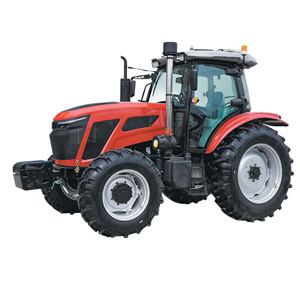



Don't Step on These Pitfalls When Choosing a Tractor! A Veteran Operator's First-Hand Test: These 3 Performance Indicators Are the Key
Release time:
2026-01-07
For farmers and agricultural workers, a tractor is not just a piece of machinery, but a core asset that directly affects farming efficiency, crop yields, and even the annual income. However, in the face of a dazzling array of tractor models on the market, many people often fall into the trap of blind selection—either being misled by exaggerated advertisements or only focusing on the price while ignoring the core performance. As a veteran operator with 15 years of experience in operating and maintaining tractors, I have witnessed countless cases of "regret purchases" due to improper selection. Today, I will share the most critical 3 performance indicators that I have summed up through years of practice. Grasping these points can help you avoid 90% of the pitfalls when choosing a tractor.
First and foremost, engine power and torque are the "heart" of a tractor and the primary indicator to consider. Many people mistakenly believe that the higher the engine power, the better, but this is not the case. The key lies in matching the power to your actual operating needs. For small-scale farmland (less than 50 mu) mainly engaged in shallow plowing, sowing, and weeding, a tractor with 25-40 horsepower is sufficient. If you have large-scale farmland (more than 100 mu) or need to carry out heavy-load operations such as deep plowing and harrowing, you should choose a model with 60-120 horsepower. What's more important than power is torque—torque determines the tractor's ability to overcome resistance during operation. A tractor with high torque can still maintain stable operation even in complex working conditions such as muddy fields and steep slopes, without stalling or losing power. When selecting, you can check the engine's torque curve parameters. A curve that rises steadily and maintains a high level in the low-to-medium speed range indicates better performance. In addition, it is also necessary to pay attention to the engine's fuel consumption rate. A high-quality engine can achieve lower fuel consumption while ensuring power output, which can save a lot of operating costs in the long run.
The second key indicator is the transmission system performance. The transmission system is equivalent to the "muscles and bones" of the tractor, which directly affects the operation smoothness and reliability. There are two main types of transmission systems on the market: manual transmission and power shift transmission. For novice operators or those who need to frequently switch gears during operation (such as greenhouse planting and orchard management), power shift transmission is more recommended—it can realize stepless speed change, reduce the labor intensity of the operator, and avoid gear shifting failures caused by improper operation. For veteran operators who are accustomed to manual operation and have relatively simple operating conditions, manual transmission can meet the needs and has the advantage of lower maintenance costs. No matter which type of transmission system you choose, you must pay attention to its bearing capacity and durability. You can check the material of the transmission gear (alloy steel is better) and the number of bearing points. At the same time, it is necessary to test the operation during the test drive: whether the gear shifting is smooth, whether there is abnormal noise, and whether the power transmission is stable. A high-quality transmission system can ensure that the tractor can work continuously for a long time without failure, improving the overall operating efficiency.
The third indicator that cannot be ignored is the chassis stability and traction performance. The chassis is the "foundation" of the tractor, and its stability directly relates to the safety of the operator and the quality of the operation. When selecting, first observe the structure of the chassis: a reinforced chassis with a thickened beam has stronger bearing capacity and can withstand the impact of uneven ground during operation. Secondly, pay attention to the wheelbase and track width. A reasonable wheelbase can improve the tractor's balance, avoiding rollover when turning; an adjustable track width can adapt to different row spacings of crops, which is more flexible in operation. Traction performance is another core part of the chassis—it determines the tractor's ability to pull agricultural machinery (such as plows, harrows, and seeders). The key factors affecting traction performance include tire type, tire pressure, and the weight of the tractor. For muddy or soft fields, it is recommended to choose tires with deep grooves and strong grip to avoid slipping; for dry and hard fields, ordinary universal tires can be used. In addition, some high-end tractors are equipped with a four-wheel drive system, which can significantly improve traction performance and passability in complex working conditions. If your operating environment is relatively harsh, four-wheel drive is a worthwhile option.
In addition to the above three core indicators, there are also some auxiliary factors that need to be considered, such as after-sales service, parts supply, and the brand's reputation. A good after-sales service system can solve the maintenance problems in a timely manner when the tractor fails; sufficient parts supply can avoid long-term downtime due to the lack of replacement parts; a brand with a good reputation usually has more reliable product quality. However, these factors are auxiliary after all. The core of avoiding pitfalls when choosing a tractor is still to grasp the three performance indicators of engine power and torque, transmission system performance, and chassis stability and traction performance.
To sum up, choosing a tractor is not a simple "buy expensive or buy cheap" thing, but a process of matching needs with performance. As a veteran operator, I sincerely suggest that you must conduct on-site inspections and test drives when purchasing, carefully check the relevant parameters of the three core indicators, and do not be misled by temporary discounts or exaggerated advertisements. Only by choosing a tractor that is suitable for your own operating needs and has excellent core performance can you truly realize "saving effort, increasing efficiency, and making money". I hope this sharing can help you avoid pitfalls and choose the most suitable tractor for yourself.
RELATED BLOG
CONTACT US
Add : Hanjia Village, Xianggongzhuang Street, Zhangqiu District, Jinan City, Shandong Province


POPULAR PRODUCTS
CONSULTAR
Copyright :Shandong Free Pilot Machinery Co.,Ltd. Powerby :CEGLOBAL | SEO | Privacy agreement