Providing you with a one-stop solution for tractors

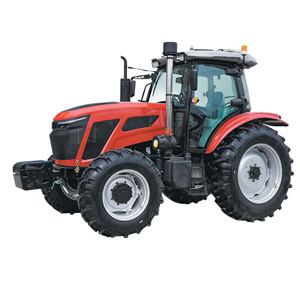



Avoiding 'Undermatching' or 'Overpowering': The Golden Rule for Horsepower Selection Based on Task Intensity
Release time:
2025-12-10
Selecting the right tractor horsepower is a critical decision that directly impacts farm efficiency, equipment longevity, and profitability. The two most common and costly mistakes are 'undermatching' (too little power) and 'overpowering' (too much power). Both create silent drains on your resources. This guide establishes a simple, task-intensity-based "Golden Rule" to guide you to the perfect power match.
The Two Costly Extremes: Understand the Risks
Undermatching :
The Scenario: Using a 60 HP tractor for heavy, deep tillage with a 3-meter disc harrow.
The Consequences:
Chronic Overload: The engine constantly runs at maximum RPM, leading to excessive heat, accelerated wear (especially on pistons, rings, and bearings), and drastically shortened engine life.
Poor Fuel Efficiency: An overloaded engine operates far outside its efficient range, burning more fuel per acre than a properly sized tractor would.
Operational Frustration: Frequent stalling, inability to maintain proper working speed, and failure to achieve the required implement depth or quality of work.
Overpowering (动力过剩):
The Scenario: Using a 150 HP tractor primarily for light mowing and occasional transport.
The Consequences:
High Capital Waste: You've paid a significant premium for power you rarely use.
Poor Fuel Efficiency at Partial Load: Large engines operating under very light loads are extremely inefficient, consuming excess fuel just to move their own weight.
Increased Soil Compaction: Excessive weight compacts soil, harming its structure, reducing water infiltration, and ultimately depressing yields.
Higher Ongoing Costs: Everything costs more: tires, filters, insurance, and potential repairs.
The Golden Rule: Task Intensity Dictates Power
The solution is to categorize your tractor's primary duties by their intensity level and match the horsepower accordingly.
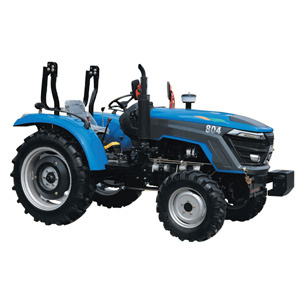
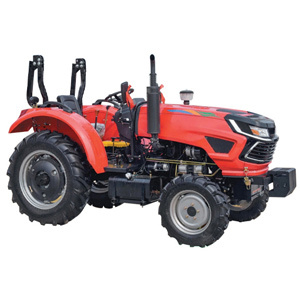
1. Light-Duty Tasks: (30-75 HP is often sufficient)
Examples: Grass mowing (finish mowing, pasture topping), light material handling with a loader (manure, feed), snow removal with a blower, running a small generator.
Characteristics: These tasks require more hydraulic flow for implements and maneuverability than raw pulling power. A compact or utility tractor in this range is ideal. An oversized tractor is pure waste here.
2. Medium-Duty Tasks: The Core "Sweet Spot" (75-120 HP)
Examples: Primary tillage with a 2-4 furrow plow or a 3-4 meter disc, baling (small to medium square/round balers), planting with mid-sized drills, operating a front-end loader for heavy materials (gravel, dirt).
Characteristics: This is the most common and demanding work cycle. The tractor needs robust PTO power and good tractive effort. It must work comfortably at 65-85% of its rated load for hours. This is where matching is most critical for efficiency and durability.
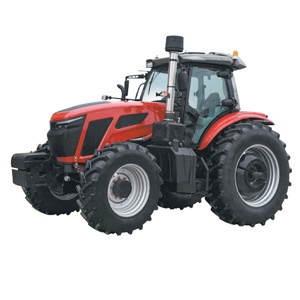
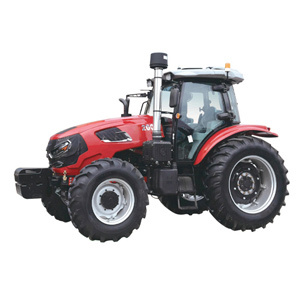
3. Heavy-Duty / High-Intensity Tasks: (130+ HP)
Examples: Deep primary tillage (subsoiling, moldboard plowing) in heavy soils, pulling wide, heavy implements (e.g., 6+ meter disc harrows, chisel plows), large-scale silage hauling with heavy wagons, high-capacity material handling in an industrial setting.
Characteristics: These tasks require maximum torque and exceptional weight for traction. The tractor must be designed with a heavy-duty chassis, large axles, and powerful hydraulics to withstand constant high stress. A smaller tractor would be destroyed; a large one is justified.
The "Two-Tractor" Strategy for Mixed Operations
For farms with varied tasks, the most cost-effective solution is often two tractors of different sizes rather than one oversized machine.
Example: A 75 HP tractor for daily chores, mowing, and light work + a 110-130 HP tractor for dedicated tillage, planting, and baling.
Advantage: Each machine operates in its optimal efficiency zone, reducing total fuel consumption, minimizing soil compaction from the lighter machine, and extending the lifespan of both. The combined cost is often less than the operational waste of a single, overpowered 150 HP tractor.
The Practical Selection Checklist
List Your Top 3 Most Frequent Tasks by Hours.
Identify the Most Power-Demanding Task among them (usually primary tillage or running the largest PTO implement).
Research the Minimum Recommended Tractor HP for that specific task/implement. Add a 15-20% Power Buffer. This buffer is your "Goldilocks Zone"—it ensures efficient operation without overload, accounts for tough conditions, and allows for future implements.
Verify Other Key Specs: Ensure the candidate tractor also has the necessary PTO HP, hydraulic capacity (GPM), and lift capacity for your other key tasks.
Conclusion: Power is a Tool, Not a Trophy
Horsepower should be treated like a surgical instrument—chosen precisely for the job at hand. By applying the Task Intensity Golden Rule, you move beyond guesswork and marketing hype. You invest in a machine that operates efficiently, lasts longer, and protects both your soil and your bottom line. The goal is not to have the most power on the farm, but to have the right power for every job.
RELATED BLOG
CONTACT US
Add : Hanjia Village, Xianggongzhuang Street, Zhangqiu District, Jinan City, Shandong Province


POPULAR PRODUCTS
CONSULTAR
Copyright :Shandong Free Pilot Machinery Co.,Ltd. Powerby :CEGLOBAL | SEO | Privacy agreement